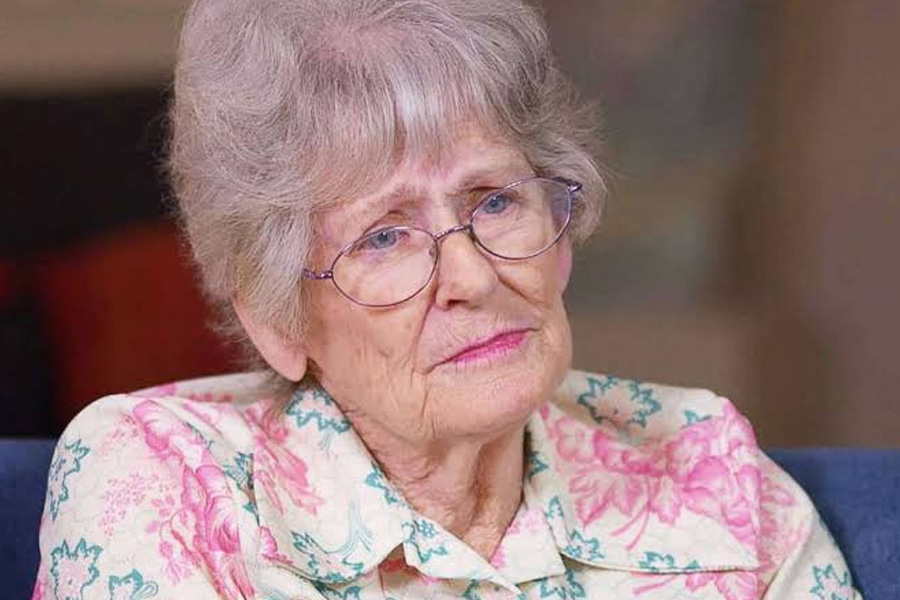
Who Is Lavona Fay Golden
Lavona Fay Golden, also known as LaVona Faye Golden, LaVona Brown, and LaVona Sandy or Sandi Harding, is best known as Tonya Harding’s mother. She was born February 1, 1940, in Walters, Cotton County, Oklahoma, and became a controversial figure skating figure.
She is best known for her difficult connection with Tonya, whose international success exposed the family’s struggles. Behind the awards, TV appearances, and dramatic headlines was a family with financial struggles, confusing childhood memories, and strained relationships.
I like Lavona’s narrative because it shows how two people can remember the same family history differently. Lavona portrays herself as a diligent mother who sacrificed her comfort for her daughter’s skating dreams. Tonya describes a childhood of instability, humiliation, and abuse.
An unresolved family conflict has shaped Lavona’s public identity for years.
Basic Information About Lavona Fay Golden
| Detail | Information |
|---|---|
| Full name | Lavona Fay Golden |
| Name variations | LaVona Faye Golden, LaVona Brown, LaVona Sandy Harding |
| Date of birth | February 1, 1940 |
| Birthplace | Walters, Cotton County, Oklahoma |
| Father | Vernon Leon Brown |
| Mother | Effie Pauline Bates |
| Former spouse | Albert Gordon Harding |
| Daughter | Tonya Maxene Harding |
| Later husband | James R. Golden |
| Known for | Being the mother of figure skater Tonya Harding |
| Occupation | Service industry worker, including waitressing and bartending |
| Public profile | Largely private since the late 1990s |
| Estimated net worth | Not reliably documented |
Although variations in her name appear in biographical and genealogical records, Lavona Fay Golden remains the name most closely associated with her later life and her daughter’s public story.
Early Life and Family Background
Lavona was born in rural Oklahoma during a period when many American families relied on hard physical work and modest incomes to get by. Her parents were Vernon Leon Brown and Effie Pauline Bates. Details about her childhood, education, and early ambitions remain limited, making it difficult to reconstruct her formative years with certainty.
At some point during her early adulthood, she moved toward the Portland, Oregon, area. This relocation marked a significant change in her surroundings, taking her from Oklahoma into a region that would eventually become closely connected with her daughter’s skating career.
Lavona’s early adult life included several marriages. Records identify an early marriage to Andrew B. Goodmiller around 1961 in California, followed by her marriage to Albert Gordon Harding in Portland on February 1, 1968. Accounts differ about the total number of marriages she entered, with some descriptions identifying four or five marriages at different points in her life.
These relationships contributed to a complicated household structure that included older children and half-siblings. Some family members lived elsewhere, and public information about them remains sparse.
Her personal history before Tonya’s birth is not as widely documented as the years that followed. Once Tonya became a competitive skater, however, Lavona’s decisions, parenting style, and family circumstances became subjects of intense public interest.
Marriage to Albert Gordon Harding
Lavona married Al Harding on February 1, 1968. Tonya Maxene Harding, born in Portland, Oregon, on November 12, 1970, was their daughter after 19 years of marriage.
Family finances were tight. Al was a rubber worker, truck driver, and apartment manager. Some records reflect his greatest hourly wage as $5.05, showing how tight the family’s finances may be.
Despite these challenges, Al helped raise Tonya. He taught her hunting, fishing, and auto maintenance. Tonya has praised her father more than her mother, describing him as a key presence in her childhood.
Lavona and Al’s marriage worsened. Lavona left the family home after their late 1987 divorce. Tonya lived with her father before he relocated to Idaho.
The split altered Tonya’s family during a crucial adolescence. She was already competing in figure skating, which needed money, transportation, equipment, and hours of training.
Tonya Harding and Her Mother’s Relationship
Tonya Harding’s relationship with Lavona is the defining element of her mother’s public biography. Their conflicting accounts have made it difficult to separate established family circumstances from disputed memories.
Tonya has described her childhood as turbulent. She has spoken about frequent moves, financial hardship, verbal humiliation, and physical abuse. Some accounts describe the family moving as many as 13 times by the time Tonya reached fifth grade. Their living arrangements reportedly included trailers, reflecting the economic instability the family experienced.
Lavona has rejected the suggestion that systematic abuse characterized her parenting. She has acknowledged spanking Tonya as a form of discipline but disputed the severity and frequency of the incidents described by her daughter. She has also challenged the portrayal of the family as impoverished outsiders, arguing that their circumstances were misrepresented.
The disagreement became particularly visible after Tonya’s story reached a national audience. Each woman’s account presented a different interpretation of the sacrifices and conflicts that shaped the household.
Tonya’s childhood friend Sandra Luckow has offered a more complicated perspective, describing Lavona as demanding and deeply involved in Tonya’s skating while also recalling behavior that concerned her. Her observations suggest that the relationship cannot be reduced easily to a simple story of either devotion or cruelty.
For me, the most striking aspect of this family history is the distance between the mother’s stated intentions and the daughter’s remembered experience. Supporting a child’s ambitions can require enormous sacrifice, but sacrifice alone does not settle questions about how that child was treated.
Lavona’s Role in Tonya’s Figure Skating Career
Lavona played a significant practical role in Tonya’s early skating career. Tonya reportedly began skating at around three years old after her mother introduced her to an ice rink. What began as a childhood activity gradually developed into a demanding competitive pursuit.
Figure skating was expensive even at the lower levels. Families had to pay for lessons, ice time, skates, costumes, transportation, and competition travel. For the Hardings, these expenses placed considerable pressure on an already limited household budget.
Lavona has said that she worked multiple jobs to help cover the costs. Her employment included waitressing, bartending, cooking, and cashier work. She described working morning, noon, and night to keep the household running and maintain Tonya’s access to training.
One particularly memorable detail concerns the costumes. Professional skating outfits could be costly, so Lavona reportedly sewed Tonya’s sequined costumes by hand. The work required patience and practical skill, transforming inexpensive materials into outfits suitable for competition.
The family also collected cans and bottles and made other financial sacrifices. These details illustrate the effort involved in keeping Tonya on the ice, even as arguments about the family’s emotional environment continued.
Lavona’s contribution was not the only factor in Tonya’s development. Coaches, natural athletic ability, training, and competitive experience all played important roles. Nevertheless, her mother’s work helped make the early stages of that journey possible.
Diane Rawlinson and the Coaching Environment
Diane Rawlinson, Tonya’s longtime skating coach, was another influential adult in her development. Rawlinson coached Tonya for much of her early career, beginning around 1973 or 1974 and continuing until 1989, before working with her again from approximately 1992 to 1994.
Rawlinson was known for a demanding approach that emphasized discipline, commitment, and focused training. She reportedly recognized Tonya’s potential when she saw the young child moving confidently around the rink. Although Rawlinson had initially been reluctant to take on very young pupils, Tonya’s ability persuaded her to reconsider.
The coach’s role extended beyond technical instruction. Because the Harding family could not always afford elite training expenses, Rawlinson reportedly reduced or waived fees, helped obtain equipment, and sought financial assistance from people in her network.
Her approach emphasized more than jumps and competition results. Rawlinson also valued personal development and hoped her skaters would become capable, well-rounded adults. She maintained a rigorous training schedule and expected athletes to respect their abilities by working consistently.
That philosophy sometimes clashed with Tonya’s desire for independence. Tonya later described Rawlinson as overly controlling, saying that the coach attempted to influence everything from her appearance to her personal interactions. Rawlinson, meanwhile, expressed concern about Tonya’s training focus and commitment to her own goals.
The relationship between Lavona and Rawlinson was also significant because both women occupied powerful positions in Tonya’s early skating life. Lavona provided family support and financial sacrifice, while Rawlinson offered coaching, structure, and assistance that extended beyond the rink.
Their involvement helped Tonya pursue an extraordinary competitive career, but neither relationship was free of tension.
Lavona’s Other Children and Family Relationships
Tonya grew up with elder half-siblings because Lavona had children from previous relationships. Some relatives were much older and lived in different households.
One half-brother, Chris Davison, was linked to Tonya’s adolescent trauma. Tonya claimed he sexually harassed or raped her at 15 while drunk. She stated she fought him and called the police, who arrested him.
Around 1988, a hit-and-run killed Davison. Few information concerning the case are known in commonly available accounts. Tonya apparently declined to attend his burial due to the past incident.
This episode deepens the family’s tumultuous past. It shows why Tonya’s relationships with certain older relatives go beyond family ties.
Less is known about Lavona’s other children. The family’s tangled past and propensity for secrecy have kept many parts of their lives private.
Marriage to James R. Golden
On December 1, 1987, Lavona married James R. Golden in Vancouver, Washington. The marriage followed the end of her relationship with Al Harding and marked another transition in the family’s domestic life.
James became Tonya’s stepfather while she was still a teenager. Tonya reportedly lived with Lavona and James for a period, but tensions continued as she grew older and sought greater independence.
Accounts of the household describe disagreements about rules, money, and expectations. Tonya has said that she was effectively pushed out when she was 18, amid disputes involving rent and household arrangements.
James occasionally commented on Tonya’s personality and skating potential in older profiles, although he has not maintained a prominent public role in the years since.
Lavona’s marriage to James also connects with the later use of the surname Golden. Public references have identified her as LaVona Golden or Mrs. James Golden, although precise details about the couple’s later life are not consistently documented.
Estrangement From Tonya and Her Grandson
Lavona and Tonya have been estranged since approximately 2002. Their separation has lasted more than two decades, with neither woman publicly establishing a lasting reconciliation.
Tonya has made it clear that she does not want her mother involved in her life or close to her son. Her husband, Joseph Jens Price, and their son, Gordon Price, born in 2011, form part of the family life Tonya has built away from her childhood household.
Lavona has reportedly never met her grandson. In interviews around 2017 and 2018, she expressed a desire to reconnect with Tonya and become part of the family again. At the same time, she said she respected her daughter’s wishes and would not force contact.
Tonya’s position has remained firm. She has indicated that she does not want reconciliation and has discussed the possibility of attending her mother’s funeral if she learns of her death, without suggesting that this would lead to renewed contact while Lavona is alive.
The estrangement is particularly painful because it has extended across multiple generations. Gordon has grown up without a relationship with his maternal grandmother, while Lavona has remained outside the life of her only widely known living daughter.
Career, Financial Circumstances, and Net Worth
Lavona did not build a conventional public career. Her working life appears to have centered on service jobs that provided income for her household and helped pay for Tonya’s skating.
Waitressing, bartending, cooking, and cashier work required long hours and practical flexibility. These jobs rarely brought financial security, particularly for a parent managing several household responsibilities.
Her best-known contribution was the time and labor she devoted to supporting Tonya. Sewing costumes, arranging transportation, and finding ways to pay for training formed part of a demanding routine that competed with the need to earn a living.
Lavona also appeared in media connected with her daughter. She was identified as Mrs. Sandi Harding in the 1986 skating documentary Sharp Edges and appeared in a 1994 60 Minutes segment. Later documentaries and dramatizations revisited her role in Tonya’s upbringing.
Her financial position remains unclear. There is no reliable, publicly established estimate of Lavona Fay Golden’s net worth, and claims assigning her a specific dollar amount should be treated cautiously. No widely documented business empire, major investment portfolio, or independent entertainment career accounts for substantial wealth.
Tonya’s fame should not be confused with her mother’s personal finances. Although Lavona became part of a nationally recognized story, public attention did not necessarily translate into lasting financial success.
Public Attention and the Film I, Tonya
After I, Tonya revived Tonya Harding’s life in late 2017 and early 2018, Lavona became public again.
The film dramatized mother-daughter relationships. Allison Janney won the Oscar for Best Supporting Actress as Lavona.
The film introduced a new generation to the family struggle, but its emotional sequences are not true. Lavona contested the picture of serious abuse and specific violent incidents.
She reaffirmed her support of Tonya’s skating in interviews after the film’s debut and rejected the family’s unfavorable image. She disputed descriptions of their living situations and criticized inflated stories.
No prolonged public comeback resulted from renewed focus. Lavona went to private life, but the film’s success kept her name linked to Tonya.
Extended Timeline of Lavona Fay Golden’s Life
| Year or date | Event |
|---|---|
| February 1, 1940 | Born in Walters, Oklahoma |
| Around 1961 | Reportedly married Andrew B. Goodmiller in California |
| February 1, 1968 | Married Albert Gordon Harding in Portland |
| November 12, 1970 | Daughter Tonya Harding was born |
| Around 1973 to 1974 | Tonya began working with coach Diane Rawlinson |
| Mid-1980s | Tonya’s competitive skating career gained momentum |
| Late 1987 | Divorced Al Harding |
| December 1, 1987 | Married James R. Golden |
| Around 1988 | Half-brother Chris Davison reportedly died in a hit-and-run |
| 1991 to 1994 | Tonya reached the height of her competitive fame |
| Around 2002 | Mother and daughter reportedly became estranged |
| 2011 | Tonya’s son Gordon Price was born |
| 2017 to 2018 | I, Tonya renewed public interest in Lavona’s story |
| 2020s | Lavona remained largely outside public life |
Frequently Asked Questions
Who is Lavona Fay Golden?
Lavona Fay Golden is best known as the mother of American figure skater Tonya Harding. She worked in service jobs and helped support Tonya’s early skating career, but she became widely discussed because of the conflicting accounts of their difficult relationship.
When was Lavona Fay Golden born?
Lavona was born on February 1, 1940, in Walters, Cotton County, Oklahoma. Her parents were Vernon Leon Brown and Effie Pauline Bates.
Who was Lavona Golden’s husband?
Lavona married Albert Gordon Harding on February 1, 1968. After their divorce in 1987, she married James R. Golden on December 1 of that year. Earlier marriage records also identify Andrew B. Goodmiller, although the total number of her marriages varies among accounts.
Did Lavona Golden support Tonya Harding’s skating career?
Yes. Lavona worked long hours to help pay for lessons, ice time, equipment, costumes, and travel. She also reportedly sewed many of Tonya’s skating costumes by hand. However, her financial sacrifices do not resolve the conflicting accounts about how she treated her daughter.
Why are Lavona Golden and Tonya Harding estranged?
Their estrangement stems from a deeply troubled relationship and sharply conflicting accounts of Tonya’s childhood. Tonya has described physical and verbal abuse, while Lavona has denied systematic abuse and disputed several allegations. They reportedly stopped communicating around 2002.
Has Lavona Golden met her grandson Gordon Price?
According to public accounts, Lavona has never met Gordon, Tonya Harding’s son with Joseph Jens Price. Tonya has expressed that she does not want her mother involved in her life or her son’s upbringing.
What is Lavona Fay Golden’s net worth?
Her net worth is not reliably documented. Although she worked for many years in service occupations and supported her daughter’s skating, there is insufficient dependable public information to establish her current assets or overall wealth.
Did Lavona Golden appear in I, Tonya?
Lavona was portrayed by Allison Janney in the 2017 film I, Tonya. Janney won the Academy Award for Best Supporting Actress for the role. The film dramatized events surrounding Tonya’s upbringing, and Lavona publicly disputed aspects of its portrayal.
What happened to Lavona Fay Golden after the film’s release?
Following interviews around 2017 and 2018, Lavona largely withdrew from public attention. Later references have primarily focused on her estrangement from Tonya and her place in the figure skater’s family history. Her current personal circumstances are not extensively documented in public accounts.